Case 01 · Product Design
2025 —
A personal operating system
An independent product, currently in design
- Client
- Independent—details under wraps until launch
- Role
- Founder · Product Design · IA
- Year
- 2025 —
- Discipline
- Product Design
Overview
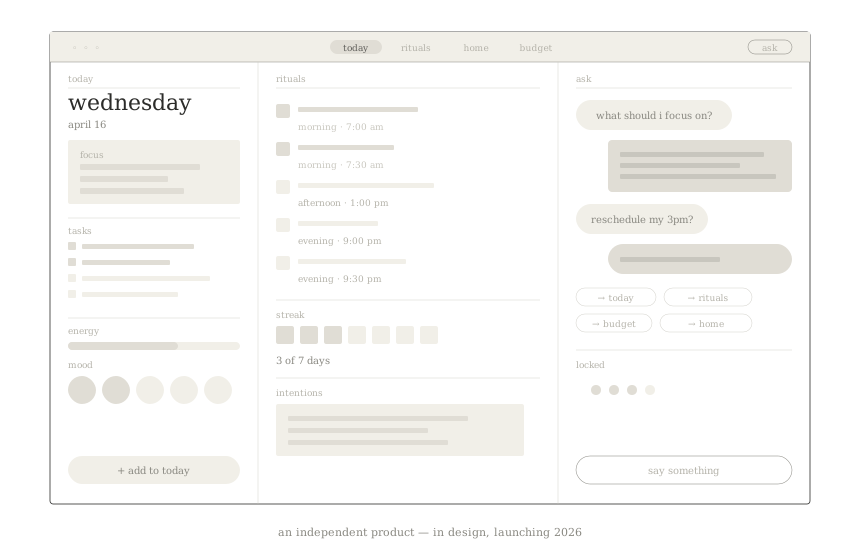
A multi-panel platform that reframes planning around human rhythm. The design treats cycle, mood, household, and ambition as first-class citizens—each visible at a glance, each quietly coordinated.
Context
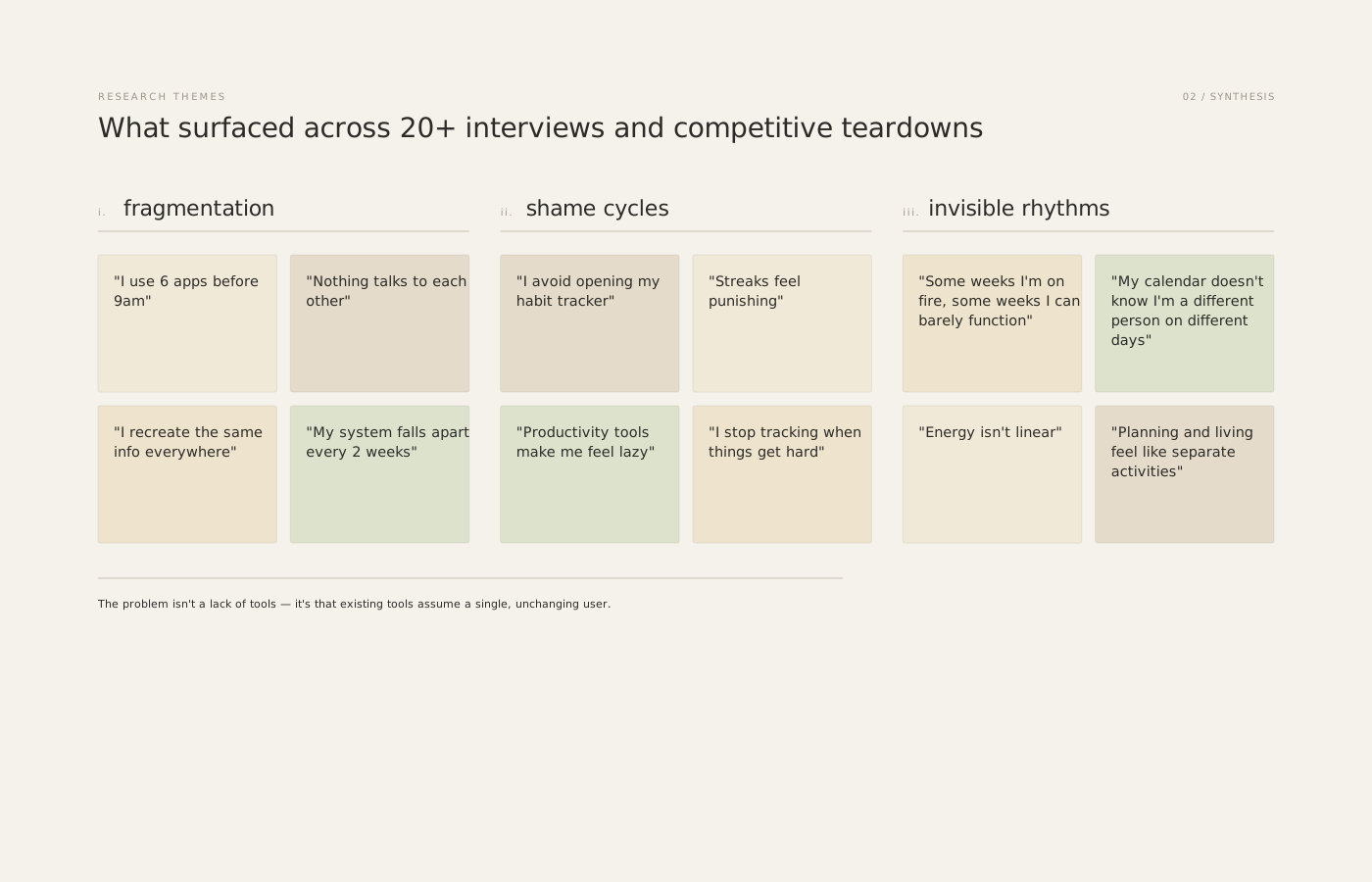
Most productivity software assumes a flat, infinite calendar and a single, unchanging self. Lifestyle OS begins with a different premise: life is seasonal, relational, and embodied. I started with deep user research and competitive analysis across calendars, habit trackers, cycle apps, and household coordination tools to surface what people were actually patching together.
Why This, Now
As AI collapses the cost of building software, the bottleneck moves from what we can build to what's worth building. This product is a bet that the next frontier isn't more tools — it's tools that hold more of a life at once, and know when to stay quiet.
Approach
- 01
Defined product vision through long-form interviews and competitive tear-downs, surfacing a gap between 'productivity' and 'lived time.'
- 02
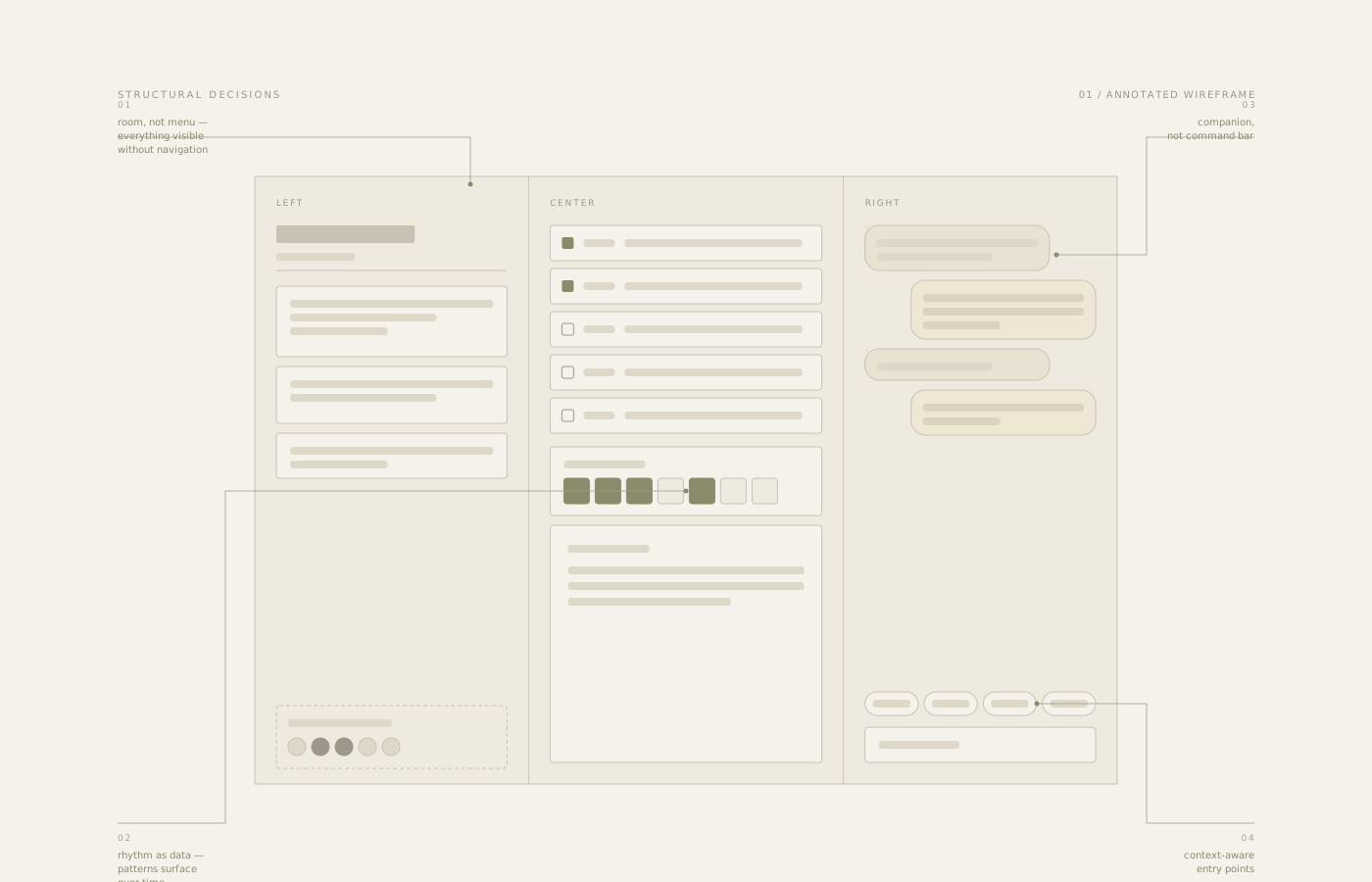
Authored core information architecture for a multi-panel workspace — each panel organized around a mode of living, not a feature category. Collapsed an initial twelve-module draft into five through rounds of card-sorting and flow analysis.
- 03
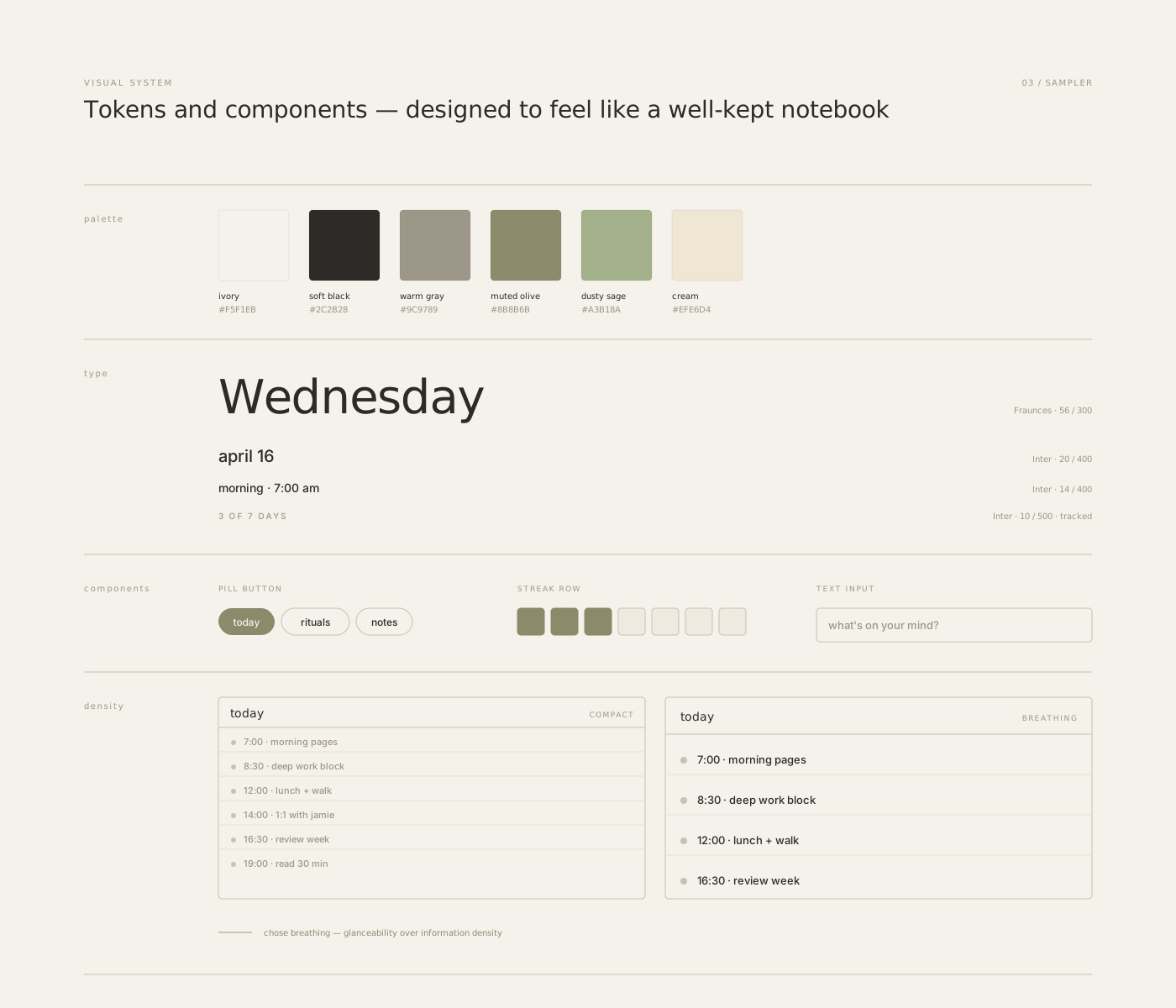
Iterated lo-fi and hi-fi wireframes against a specific anti-pattern: the dashboard. The product had to feel like a well-kept notebook — glanceable, quiet, and patient — not a cockpit of metrics competing for attention.
- 04
Built a comprehensive component library—type, density, motion—scaled for mobile and desktop.
Key Decisions
- — Chose structural visibility over navigational tidiness. The product is a room, not a menu — everything lives in sight, not behind taps.
- — Designed against the dashboard idiom. Numbers and charts give way to pacing, presence, and proximity. Rigor shows up as restraint.
- — Held back on AI intervention. The assistant responds when spoken to, not when it thinks it should help. A thought partner, not a concierge.
Process Artifacts
Outcomes
- — A validated product thesis: the gap isn't missing features but structural incoherence between the tools people already use.
- — An information architecture that collapses six adjacent product categories into a single coherent workspace without sacrificing depth in any of them.
- — A design system ready for engineering handoff — tokens, components, states, and motion documented end to end.
Recognition
- — Ongoing—launching in phases through 2026.
Next